The concept of digital taste encoding has emerged as a groundbreaking frontier in the intersection of technology and sensory science. Unlike traditional methods of data transmission, which focus on visual or auditory signals, this protocol seeks to digitize and transmit taste sensations. Researchers and engineers are working tirelessly to decode the complex biochemical signals that define how humans perceive flavor, aiming to replicate them through digital means. The implications of such technology span industries, from culinary arts to healthcare, promising a future where taste can be shared or modified at the click of a button.
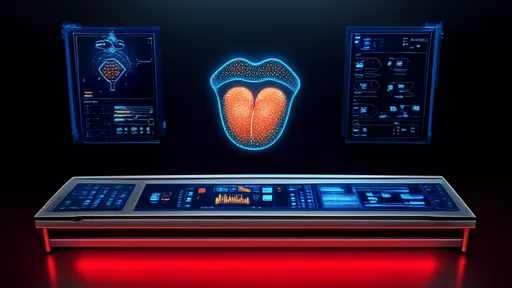
At the heart of digital taste encoding lies the challenge of translating analog sensory data into a digital format. Taste, as a sensory experience, is inherently multidimensional—comprising sweet, salty, sour, bitter, and umami, along with countless subtle nuances. Scientists are developing algorithms that can map these sensations into binary code, much like how images are broken down into pixels. Early experiments involve electrodes that stimulate taste buds in specific patterns, effectively "tricking" the tongue into perceiving flavors that aren’t physically present. While still in its infancy, the technology has already shown promise in controlled lab environments.
The potential applications of this technology are as diverse as they are revolutionary. In the culinary world, chefs could create dishes that change flavor profiles dynamically, offering personalized dining experiences. Imagine a single dish that adjusts its taste based on the diner’s preferences or dietary restrictions. Beyond gastronomy, healthcare stands to benefit significantly. Patients with impaired taste due to medical conditions could regain their ability to enjoy food through digital taste stimulation. Even the entertainment industry could leverage this protocol to create immersive experiences where viewers don’t just see and hear but also taste what’s happening on screen.
However, the road to perfecting digital taste encoding is fraught with challenges. One major hurdle is the subjective nature of taste perception. What one person finds pleasantly sweet, another might find cloying. Cultural and genetic differences further complicate the development of a universal taste code. Additionally, ethical questions arise regarding the manipulation of sensory experiences. Could digitally altering taste have unintended psychological effects? How might this technology be misused? These are questions that researchers and ethicists must grapple with as the field advances.
Despite these challenges, progress in digital taste encoding continues at a rapid pace. Collaborative efforts between neuroscientists, engineers, and culinary experts are pushing the boundaries of what’s possible. Prototypes of taste-transmitting devices are already being tested, and early adopters are eagerly anticipating commercial applications. As with any disruptive technology, the key to success lies in balancing innovation with responsibility. The day when we can send a favorite flavor to a friend across the globe may not be as far off as we think.
The societal impact of this technology could be profound. Food scarcity, for instance, might be mitigated by enhancing the taste of sustainable but less palatable food sources. Soldiers or astronauts on long missions could enjoy a wider variety of flavors without the need for bulky supplies. On a more personal level, families separated by distance might share not just photos and messages but also the taste of a home-cooked meal. The emotional resonance of taste—a powerful trigger for memory and nostalgia—adds another layer of significance to this technological pursuit.
Looking ahead, the evolution of digital taste encoding will likely parallel the development of other sensory technologies. Just as virtual reality has advanced to include haptic feedback, the integration of taste could create fully immersive multisensory environments. The protocol’s standardization will be crucial, ensuring compatibility across devices and platforms. Industry leaders are already beginning to discuss frameworks for interoperability, much like the early days of the internet. What began as a niche scientific curiosity is poised to become a transformative force in how we interact with the world—and with each other.
By /Jul 29, 2025
By /Jul 29, 2025
By /Jul 29, 2025
By /Jul 29, 2025
By /Jul 29, 2025
By /Jul 29, 2025
By /Jul 29, 2025
By /Jul 29, 2025
By /Jul 29, 2025
By /Jul 29, 2025

By /Jul 29, 2025

By /Jul 29, 2025
By /Jul 29, 2025
By /Jul 29, 2025
By /Jul 29, 2025
By /Jul 29, 2025
By /Jul 29, 2025
By /Jul 29, 2025
By /Jul 29, 2025
By /Jul 29, 2025
