In the quiet laboratories of academic institutions and tech giants alike, a silent revolution is unfolding. The dream of a quantum internet—a network leveraging the bizarre properties of quantum mechanics for unhackable communication and distributed quantum computing—is inching closer to reality. At the heart of this endeavor lies a critical challenge: improving the efficiency of entanglement distribution, the process that enables quantum particles to share states instantaneously across vast distances. Recent advancements suggest we may be on the cusp of solving one of the field’s most stubborn bottlenecks.
Entanglement, famously dubbed "spooky action at a distance" by Einstein, is the phenomenon where two or more particles become inextricably linked, such that the state of one instantly influences the other, regardless of separation. For a quantum internet, distributing these entangled pairs reliably and at scale is non-negotiable. Yet, losses in optical fibers, noise in quantum memories, and the fragility of entangled states have long plagued researchers. The efficiency of this process—measured by how many usable entangled pairs survive transmission—has been a key metric separating theoretical promise from practical viability.
Earlier this year, a team at the University of Science and Technology of China (USTC) reported a landmark achievement: they demonstrated entanglement distribution over 1,200 kilometers using the Micius satellite, achieving efficiencies previously thought impossible for ground-based systems. By bypassing the attenuation issues of fiber optics with free-space quantum communication, the experiment hinted at a hybrid future where satellites and ground stations work in concert. "The satellite acts as a entanglement distributor, a relay that sidesteps the losses inherent in terrestrial methods," explained lead researcher Jian-Wei Pan. The implications for global quantum networking are profound.
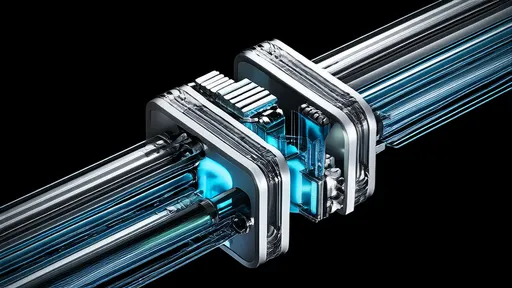
Meanwhile, in the realm of fiber optics, researchers at Delft University of Technology have taken a different approach. Their focus? Quantum repeaters—devices that could extend entanglement distribution by "stitching together" shorter entangled links. In a Nature paper published last month, the team unveiled a repeater prototype with a 10-fold improvement in efficiency over previous designs, thanks to novel error-correction protocols and diamond-based quantum memory. "The repeater doesn’t just amplify signals like classical ones do," said project lead Ronald Hanson. "It actively repairs entanglement, making long-distance quantum links feasible without waiting for perfect hardware."
Industry players are also entering the fray. IBM and Google have quietly filed patents for "entanglement distillation" techniques—methods to extract high-quality entangled pairs from noisy transmissions. Startups like Qunnect in Brooklyn are commercializing room-temperature quantum memories to eliminate cryogenic bottlenecks. The diversity of approaches reflects the field’s recognition that no single silver bullet exists. "It’s like building the first railroads," remarked Qunnect CEO Noel Goddard. "Some routes will work for mountains, others for deserts. We need all of them."
Yet, challenges persist. Even with improved efficiencies, scaling entanglement distribution to support millions of users—a necessity for a true quantum internet—remains daunting. Theoretical work from MIT’s Quantum Engineering Group suggests that hybrid quantum-classical networks may bridge the gap during the transition period. Their models show that "quantum islands" (local high-efficiency networks) could interoperate via classical infrastructure until fully quantum repeaters mature. "We’re looking at a decade of coexistence," noted principal investigator Will Oliver.
The geopolitical stakes are high. China’s heavy investment in quantum infrastructure has spurred competing initiatives like the EU’s Quantum Internet Alliance and the U.S. National Quantum Initiative. Behind the scenes, standards bodies are racing to define protocols for entanglement swapping and purification—the TCP/IP of the quantum era. "Whoever cracks large-scale entanglement distribution first will own the backbone of the next internet," warned a White House advisor speaking anonymously.
As autumn conferences prepare to showcase the latest results, one thing is clear: entanglement distribution efficiency is no longer just an academic curiosity. It’s the linchpin determining whether the quantum internet remains a lab curiosity or becomes the foundation of 21st-century communication. The breakthroughs of the past twelve months suggest the scales may finally be tipping toward the latter.
By /Jul 29, 2025

By /Jul 29, 2025
By /Jul 29, 2025
By /Jul 29, 2025

By /Jul 29, 2025
By /Jul 29, 2025
By /Jul 29, 2025
By /Jul 29, 2025
By /Jul 29, 2025
By /Jul 29, 2025

By /Jul 29, 2025

By /Jul 29, 2025
By /Jul 29, 2025
By /Jul 29, 2025
By /Jul 29, 2025
By /Jul 29, 2025
By /Jul 29, 2025
By /Jul 29, 2025

By /Jul 29, 2025

By /Jul 29, 2025
