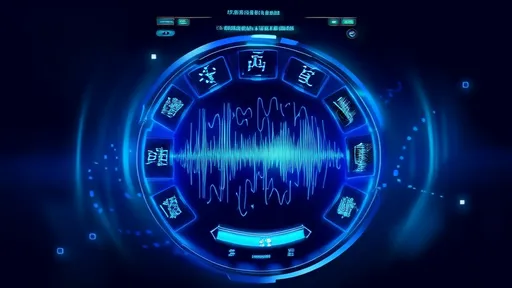
In a groundbreaking development for both linguistics and artificial intelligence, researchers have unveiled a new dialect-based speech recognition puzzle-solving system that promises to revolutionize how we interact with technology. This innovative approach combines cutting-edge voice recognition algorithms with deep learning models specifically trained to understand and process regional dialects, opening up new possibilities for language preservation and human-computer interaction.
The system represents a significant leap forward from traditional speech recognition technologies, which often struggle with accents and regional variations. Where conventional systems might falter when encountering the distinctive tones of Southern American English, the thick brogue of Glasgow, or the melodic cadences of Cantonese-speaking regions, this new framework thrives on such diversity. By embracing linguistic variety rather than treating it as noise to be filtered out, the technology achieves remarkable accuracy even with heavily accented speech patterns.
At the heart of this innovation lies a sophisticated neural network architecture that has been trained on an unprecedented dataset of regional speech samples. Researchers collected thousands of hours of natural conversation across dozens of dialects, capturing not just pronunciation differences but also the unique grammatical structures and vocabulary choices that characterize regional speech. This comprehensive training enables the system to understand context and intent far beyond simple word recognition.
What sets this technology apart is its puzzle-solving capability. Unlike standard voice assistants that merely execute commands, this system engages users in interactive problem-solving sessions that adapt to their speech patterns. The more a user interacts with the system, the better it becomes at understanding their particular dialect while simultaneously presenting increasingly complex linguistic puzzles tailored to their comprehension level.
The applications for such technology are vast and varied. In educational settings, it could help preserve endangered dialects by creating interactive learning tools that adapt to regional speech patterns. For businesses operating in multilingual regions, it offers the potential for truly localized voice interfaces that understand customers on their own terms. Even in healthcare, where clear communication can be a matter of life and death, such systems could help bridge the gap between medical professionals and patients who speak with strong regional accents.
One particularly fascinating aspect of the technology is its ability to detect and analyze subtle shifts in pronunciation that often go unnoticed by human ears. The system can identify minute variations in vowel sounds or rhythmic patterns that distinguish one regional variant from another. This level of detail allows it to not just understand speech but also provide insights into linguistic evolution and the migration patterns of language communities.
Privacy concerns have been carefully addressed in the system's design. Unlike cloud-based voice assistants that send recordings to remote servers, this technology processes speech entirely locally on the user's device. This approach not only protects sensitive conversations but also allows for faster response times since there's no need to wait for data to travel to and from distant data centers.
The development team has emphasized that this is not meant to replace standard speech recognition systems but rather to complement them. While conventional voice-to-text might remain the best choice for formal speech or mainstream dialects, this new system shines when dealing with the rich tapestry of regional variations that make human language so wonderfully complex. Early tests show particular promise in rural areas and among older populations who often feel excluded by technology designed primarily for urban, standardized speech patterns.
Looking ahead, researchers are exploring ways to expand the system's capabilities beyond mere recognition. Future versions might incorporate real-time dialect translation, allowing speakers of different regional variants to communicate seamlessly. There's also potential for historical linguistics applications, where the system could analyze recordings from different time periods to track how pronunciations have evolved within specific communities.
As with any emerging technology, challenges remain. Some linguists have raised concerns about the potential for such systems to inadvertently contribute to dialect leveling by steering users toward more standardized pronunciations. The developers counter that their approach actually celebrates linguistic diversity by creating technology that adapts to people rather than forcing people to adapt to technology.
The commercial rollout of this technology is expected to begin with specialized applications before potentially reaching consumer devices. First implementations will likely appear in language learning platforms, customer service applications for regional businesses, and tools for academic research in linguistics and anthropology. As the technology matures and becomes more affordable, we may see it integrated into mainstream devices as an alternative voice interaction mode for users who find conventional speech recognition inadequate.
This development marks an important milestone in making technology more inclusive and accessible. By finally giving proper attention to the rich diversity of human speech, it opens doors for millions of people who have traditionally been poorly served by voice recognition systems. In doing so, it doesn't just solve technical puzzles - it helps solve very human problems of communication and connection.

By /Jul 29, 2025

By /Jul 29, 2025
By /Jul 29, 2025

By /Jul 29, 2025

By /Jul 29, 2025

By /Jul 29, 2025

By /Jul 29, 2025

By /Jul 29, 2025

By /Jul 29, 2025

By /Jul 29, 2025

By /Jul 29, 2025

By /Jul 29, 2025

By /Jul 29, 2025

By /Jul 29, 2025

By /Jul 29, 2025
By /Jul 29, 2025

By /Jul 29, 2025
By /Jul 29, 2025

By /Jul 29, 2025

By /Jul 29, 2025
