The release of the Monster Organ Functional Design Whitepaper has sent ripples through the scientific and bioengineering communities. This groundbreaking document outlines the theoretical and practical frameworks for designing functional biological systems inspired by mythical creatures and speculative evolution. Unlike traditional organ design, which focuses solely on replicating existing biological structures, this approach embraces the fantastical, blending imagination with rigorous scientific methodology.
At its core, the whitepaper challenges the notion that biological design must be constrained by natural precedents. By studying the exaggerated or impossible traits of mythical monsters—such as regenerative hydra limbs, dragonfire-producing glands, or chimeric hybrid organs—researchers are uncovering novel principles of tissue engineering and synthetic biology. The document posits that these "monstrous" features, while non-existent in nature, represent untapped potential for solving real-world medical and technological challenges.
The Philosophy Behind Monster Organ Design
What distinguishes this whitepaper from conventional bioengineering literature is its deliberate departure from biomimicry. Where typical approaches seek to copy nature's solutions, monster organ design asks: "What could nature have created if the evolutionary constraints were different?" This shift in perspective opens doors to radical innovations—organs that perform functions no natural creature possesses, tissues with unprecedented resilience, and biological systems that interface seamlessly with technology.
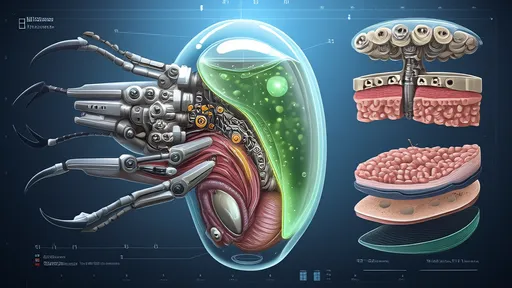
The whitepaper emphasizes that these designs aren't mere flights of fancy. Each proposed organ system undergoes rigorous computational modeling to test physiological viability. For instance, the document details how a hypothetical "thermal regulation bladder" inspired by frost salamanders could theoretically maintain cryogenic temperatures through controlled chemical reactions—a capability with profound implications for organ preservation and extreme environment medicine.
Technical Breakthroughs and Challenges
Several technical sections of the whitepaper have drawn particular attention from researchers. The proposed "modular organ scaffolding" system allows for organs to be rapidly reconfigured or replaced, taking cues from shapeshifting creatures in folklore. Early experiments with 4D-printed biomaterials that change structure in response to electrical stimuli show promise in making this concept a reality.
However, the document doesn't shy away from the significant hurdles. Creating vascular systems capable of supporting hyper-metabolic organs, developing neural interfaces for non-standard sensory inputs, and preventing immune rejection of radically novel tissues all present formidable obstacles. The whitepaper suggests that solutions may lie in combining advances in gene editing, nanotechnology, and artificial intelligence-driven design optimization.
Ethical Considerations and Future Applications
Perhaps the most provocative aspect of the whitepaper is its unabashed embrace of what some might consider "playing god." The authors argue that in an era of climate change and potential space colonization, humanity may need biological systems that exceed what natural evolution has provided. A particularly controversial section explores designs for radiation-resistant organs based on mythical creatures said to dwell in celestial realms.
Practical applications are already emerging. Military researchers are reportedly interested in trauma-resistant tissue designs inspired by troll regeneration myths. Environmental scientists see potential in organs that could filter or neutralize pollutants, modeled after creatures said to purify water in legends. The whitepaper even proposes speculative medical applications, such as temporary "placeholder organs" that gradually transform into permanent replacements—an idea drawn from metamorphosis myths.
The Cultural Impact of Monster-Inspired Science
Beyond its technical content, the whitepaper represents a fascinating cultural moment—the intersection of ancient myth and cutting-edge science. Historians note that many mythical creatures were originally conceived as explanations for natural phenomena or embodiments of human fears and aspirations. Now, these very concepts are informing real scientific progress.
The document has sparked debates about how we define life and the boundaries of biological possibility. Some critics argue that pursuing such fantastical designs distracts from pressing medical needs, while proponents counter that history shows how speculative research often yields unexpected practical benefits. The whitepaper itself takes a middle ground, urging responsible development while maintaining that pushing boundaries is essential for breakthroughs.
Looking Forward: The Next Generation of Biological Design
As research institutions begin to implement ideas from the whitepaper, the field stands at a crossroads. The coming years will determine whether monster organ design remains a niche curiosity or evolves into a mainstream approach. What's certain is that this document has permanently expanded the horizons of bioengineering, proving that sometimes, the most valuable scientific insights come not from studying what is, but from imagining what could be.
The whitepaper concludes with a call for interdisciplinary collaboration, inviting not just scientists and engineers, but also artists, historians, and philosophers to contribute to this emerging field. In doing so, it acknowledges that designing the biological future may require drawing from humanity's entire cultural heritage—where the monsters of our ancestors' imaginations might become the building blocks of tomorrow's medical miracles.
By /Jul 29, 2025
By /Jul 29, 2025
By /Jul 29, 2025

By /Jul 29, 2025
By /Jul 29, 2025
By /Jul 29, 2025
By /Jul 29, 2025
By /Jul 29, 2025
By /Jul 29, 2025
By /Jul 29, 2025
By /Jul 29, 2025
By /Jul 29, 2025
By /Jul 29, 2025

By /Jul 29, 2025

By /Jul 29, 2025
By /Jul 29, 2025
By /Jul 29, 2025
By /Jul 29, 2025

By /Jul 29, 2025

By /Jul 29, 2025
