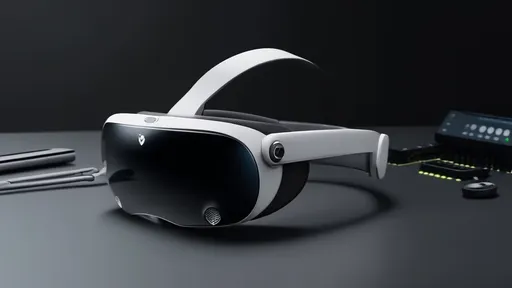
The virtual reality industry has witnessed a significant leap forward with the introduction of Pancake optics in VR headsets. This innovative lens technology is reshaping how users experience immersive content, offering unparalleled clarity and comfort. Unlike traditional Fresnel lenses, Pancake optics employ a folded light path design that drastically reduces the thickness and weight of VR headsets while maintaining high optical performance.
Pancake optics represent a paradigm shift in VR headset design. By utilizing a series of reflective surfaces and polarization layers, these lenses fold the light path multiple times within a compact space. This engineering marvel allows for slimmer headset profiles without sacrificing image quality. Users report a noticeable reduction in the "goggle effect" commonly associated with bulkier VR devices, leading to longer, more comfortable usage sessions.
The visual improvements brought by Pancake lenses are immediately apparent. Edge-to-edge clarity sees remarkable enhancement, eliminating the blurriness that often plagues peripheral vision in traditional VR setups. Color fidelity and contrast ratios benefit from the reduced optical aberrations inherent in the Pancake design. These advancements create a more convincing virtual environment that feels less like looking through a lens and more like natural vision.
Beyond visual quality, the ergonomic benefits of Pancake optics cannot be overstated. The weight distribution changes enabled by these thinner lenses result in headsets that feel balanced rather than front-heavy. This proves particularly advantageous for extended gaming sessions or professional applications where users might wear the headset for hours at a time. The reduced form factor also makes the technology more accessible to users who previously found VR headsets too cumbersome.
Adoption of Pancake optics coincides with other critical VR advancements. Higher resolution displays pair exceptionally well with the improved optical path, as the lenses can resolve finer details without introducing additional distortion. The combination creates visuals that approach retinal clarity in the center of view, a milestone that brings us closer to truly lifelike virtual experiences. This synergy between display and optical technologies marks an inflection point in VR's evolution.
The thermal characteristics of Pancake lenses present another advantage over traditional designs. With less material and a more efficient light path, these optics generate minimal heat during operation. This contributes to both user comfort and the longevity of the headset's components. Early adopters have noted the absence of lens fogging issues that sometimes occur with other VR systems during intense usage.
Content creators stand to benefit significantly from this optical breakthrough. The predictable, uniform optical performance across the entire image plane allows for more accurate content development. Designers can now create virtual environments with the confidence that users will see them as intended, without compensating for lens-induced distortions. This fidelity enables new creative possibilities in fields ranging from architectural visualization to medical training simulations.
While the advantages are numerous, Pancake optics do present some engineering challenges. The folded light path results in lower brightness transmission compared to conventional lenses, necessitating brighter display panels to compensate. Manufacturers have addressed this through advanced panel technologies and optimized optical coatings. These solutions maintain vibrant, well-saturated images despite the light path complexities.
The industry response to Pancake optics has been overwhelmingly positive, with multiple major manufacturers incorporating the technology into their flagship products. This rapid adoption signals a broader industry shift toward prioritizing both performance and wearability in VR system design. As production scales and manufacturing techniques improve, we can expect to see Pancake optics trickle down to more affordable consumer models.
Looking ahead, Pancake optics may serve as the foundation for future VR innovations. Their compact nature makes them ideal for mixed reality applications where slim profiles are essential for blending digital and physical worlds. The technology also shows promise for varifocal implementations that could solve the vergence-accommodation conflict in current VR systems. These potential developments hint at an exciting roadmap for immersive technology.
User testimonials highlight the tangible difference Pancake optics make in daily use. Many report being able to read small text in virtual environments for the first time without strain. The reduction in eye fatigue represents a meaningful quality-of-life improvement for both casual users and professionals who rely on VR for work. These real-world benefits underscore why this technology represents more than just a technical specification improvement.
The environmental impact of VR headsets also sees positive effects from this optical advancement. Smaller form factors translate to reduced material usage in both the lenses themselves and the headset enclosures that house them. As sustainability becomes an increasing concern for tech products, these efficiency gains contribute to more eco-friendly device lifecycles without compromising performance.
Pancake optics have arrived at a crucial moment for the VR industry. As the technology moves beyond early adoption into mainstream implementation, it addresses many of the comfort and usability barriers that previously limited VR's appeal to broader audiences. This optical revolution, while perhaps less flashy than other VR advancements, may ultimately prove to be the key that unlocks virtual reality's full potential across consumer and enterprise markets alike.

By /Jul 29, 2025

By /Jul 29, 2025

By /Jul 29, 2025

By /Jul 29, 2025

By /Jul 29, 2025
By /Jul 29, 2025
By /Jul 29, 2025
By /Jul 29, 2025
By /Jul 29, 2025

By /Jul 29, 2025
By /Jul 29, 2025

By /Jul 29, 2025

By /Jul 29, 2025

By /Jul 29, 2025

By /Jul 29, 2025

By /Jul 29, 2025

By /Jul 29, 2025

By /Jul 29, 2025

By /Jul 29, 2025

By /Jul 29, 2025
