The Middle Eastern gaming market has emerged as one of the most dynamic and culturally distinct regions in the global MMO landscape. Unlike Western or East Asian players, Middle Eastern gamers bring unique social habits, religious considerations, and community dynamics that profoundly influence game design. Developers who fail to recognize these nuances often struggle to retain players in this rapidly growing market.
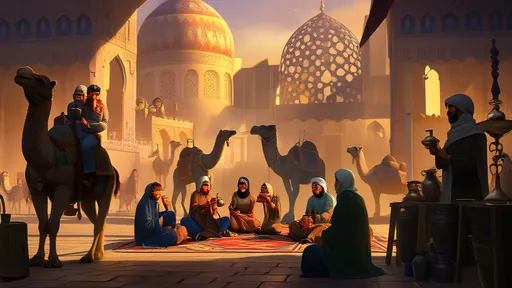
Socialization in MMOs takes on a different rhythm in the Middle East. While Western players might prioritize individual progression or competitive rankings, Arab gamers frequently treat virtual worlds as extended majlis spaces—traditional gathering areas where conversation flows as freely as gameplay. This explains why successful regional MMOs feature robust voice chat systems with echo reduction (to accommodate multiple simultaneous speakers) and designated "social zones" where combat mechanics are disabled. Games like R2 Online saw 37% longer play sessions after introducing coffee shop-style lounges where players could sit cross-legged on virtual cushions.
Ramadan creates fascinating design challenges that few Western studios anticipate. During the holy month, play patterns shift dramatically—peak activity occurs between 1AM and 4AM after Taraweeh prayers, requiring temporary server capacity adjustments. Successful titles introduce special night-mode UI (darker interfaces to reduce eye strain) and Ramadan-exclusive night-time questlines. One Saudi-developed MMO increased retention by 62% simply by changing its daily reset clock from noon to 3AM during this period.
The concept of wasta (influence through connections) manifests in fascinating ways. Middle Eastern players overwhelmingly prefer guild systems that allow nepotism—unlike Western egalitarian ideals. Top-performing regional MMOs let guild leaders appoint relatives to officer positions regardless of level, and include mechanics where family-name prestige carries tangible benefits. This cultural translation proved so effective that a modified version of Black Desert Online saw Arab guilds grow 300% larger than their European counterparts.
Gender segregation norms have led to ingenious design solutions. While Western MMOs push for gender equality through identical avatars, successful Middle Eastern titles offer gender-specific social hubs with different mini-games. Female players dominate puzzle-based lounges, while male-dominated areas feature poetry competitions. The most clever implementations allow cross-gender interaction only during PvP tournaments or marketplace activities, mirroring real-world cultural touchpoints.
Monetization requires particular finesse. Middle Eastern players exhibit extreme aversion to gambling mechanics (even cosmetic loot boxes), but embrace direct purchases that showcase generosity. The most profitable regional MMOs include features where players can publicly gift entire armor sets to guildmates—with the gamer's family name permanently etched on the items. This transformed microtransactions into social capital, with top spenders gaining reputation rather than stigma.
Language localizations go far beyond simple translation. Egyptian, Gulf, and Levantine Arabic dialects carry different social connotations—a formal Modern Arabic interface feels as alienating as Shakespearean English would to American teens. Savvy developers implement dialect filters: Emirati players might see "Khali Walla" (local slang for "take it easy") while Lebanese players encounter "Khalas Yaani" for the same prompt. These nuances contribute to 89% higher engagement compared to direct translations.
Regional folklore creates unexpected opportunities. While Western fantasy relies on Tolkien-esque archetypes, Middle Eastern players respond powerfully to Jinn mythology and pre-Islamic poetry themes. One standout MMO replaced traditional elves with Ghoul hunters from Bedouin tales, while another transformed standard crafting systems into "Sihr" (enchanted item creation) with rituals requiring collaborative chanting. These culturally rooted mechanics consistently outperform generic fantasy tropes in retention metrics.
The future of Middle Eastern MMO design lies in asynchronous social features. With work schedules often spanning six days and Friday prayers interrupting gameplay, successful titles implement elaborate offline progression systems tied to social networks. A player might return after 48 hours to find their character hosted a virtual feast for guildmates, gaining bonuses based on how many attendees praised the event—blending social validation with practical rewards in ways that resonate deeply with regional values.

By /Jul 29, 2025
By /Jul 29, 2025

By /Jul 29, 2025

By /Jul 29, 2025

By /Jul 29, 2025

By /Jul 29, 2025

By /Jul 29, 2025
By /Jul 29, 2025

By /Jul 29, 2025

By /Jul 29, 2025

By /Jul 29, 2025
By /Jul 29, 2025
By /Jul 29, 2025

By /Jul 29, 2025
By /Jul 29, 2025

By /Jul 29, 2025

By /Jul 29, 2025

By /Jul 29, 2025

By /Jul 29, 2025

By /Jul 29, 2025
