The gaming industry thrives on innovation, but sometimes the most fascinating stories emerge from the shadows of unreleased projects. The recent salvage operation of an unreleased prototype game has sent ripples through developer circles, offering a rare glimpse into the creative process—and the fragility—of game development.
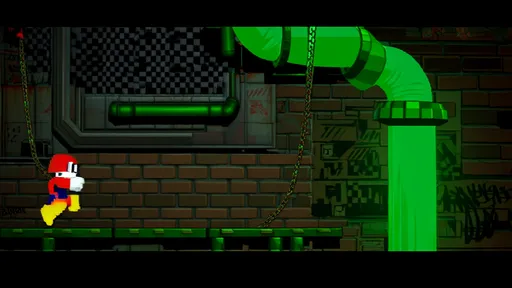
Buried in the archives of a now-defunct studio, the prototype was discovered by a team of preservationists working to digitize old development materials. What began as routine archival work quickly turned into a full-scale recovery mission when they realized the significance of the find. The game, codenamed "Project Phoenix", was a bold experiment in open-world design, blending mechanics that wouldn’t become mainstream until years later. Yet, like so many ambitious projects of its era, it was shelved due to budget constraints and shifting corporate priorities.
The recovery process was anything but straightforward. Decades-old proprietary tools, corrupted asset files, and incomplete documentation turned the project into a digital archaeology dig. "We weren’t just dealing with missing textures or broken scripts," explained one of the engineers involved. "Entire systems had to be reverse-engineered from fragments of code and handwritten notes scrawled in the margins of design documents." The team relied on a mix of modern emulation techniques and painstaking manual reconstruction to breathe life back into the prototype.
What makes this recovery particularly remarkable is how it challenges our perception of gaming history. Most discussions about unreleased games focus on "what could have been," but this effort shifts the conversation to "what still can be." The prototype’s dynamic event system—where NPCs would organically form relationships and rivalries—predates similar features in modern titles by nearly a decade. Even in its unfinished state, the game offers valuable insights into design philosophies that were ahead of their time.
The preservation team faced ethical questions alongside technical hurdles. Should they stay true to the original vision, or implement quality-of-life improvements that later became industry standards? In the end, they opted for a hybrid approach: the core experience remains untouched, while optional modernized controls and UI are available as toggles. This decision preserves the game’s historical authenticity while making it accessible to contemporary audiences.
Beyond its technical achievements, the prototype’s revival has sparked discussions about the importance of preserving gaming’s developmental dead-ends. Unlike films or music, where outtakes and demos often see eventual release, abandoned game projects typically vanish without a trace. This recovery demonstrates how much can be learned from these artifacts—not just about game design, but about the creative process itself. The team’s detailed documentation of their restoration methods may set a new standard for how such projects are handled in the future.
The gaming community’s response has been overwhelmingly positive, with many praising the effort as an act of cultural preservation. However, some developers have expressed mixed feelings. "It’s bittersweet," admitted one veteran designer unaffiliated with the project. "We pour our hearts into these prototypes, then lock them away when they don’t fit business plans. Seeing one come back is thrilling, but it also reminds us how much great work never sees the light of day."
As the restored prototype prepares for its first public showing at a retro gaming expo, questions linger about its legacy. Will it inspire developers to revisit abandoned ideas? Could it influence a new generation of games? Whatever the outcome, this抢救工程 has already accomplished something rare: it turned a forgotten relic into a living piece of gaming history, proving that even in the digital age, nothing is ever truly lost—just waiting to be rediscovered.
By /Jul 29, 2025
By /Jul 29, 2025
By /Jul 29, 2025

By /Jul 29, 2025

By /Jul 29, 2025

By /Jul 29, 2025

By /Jul 29, 2025

By /Jul 29, 2025

By /Jul 29, 2025

By /Jul 29, 2025

By /Jul 29, 2025
By /Jul 29, 2025
By /Jul 29, 2025

By /Jul 29, 2025

By /Jul 29, 2025

By /Jul 29, 2025
By /Jul 29, 2025
By /Jul 29, 2025

By /Jul 29, 2025

By /Jul 29, 2025
